

SKIN CANCER SURGERY
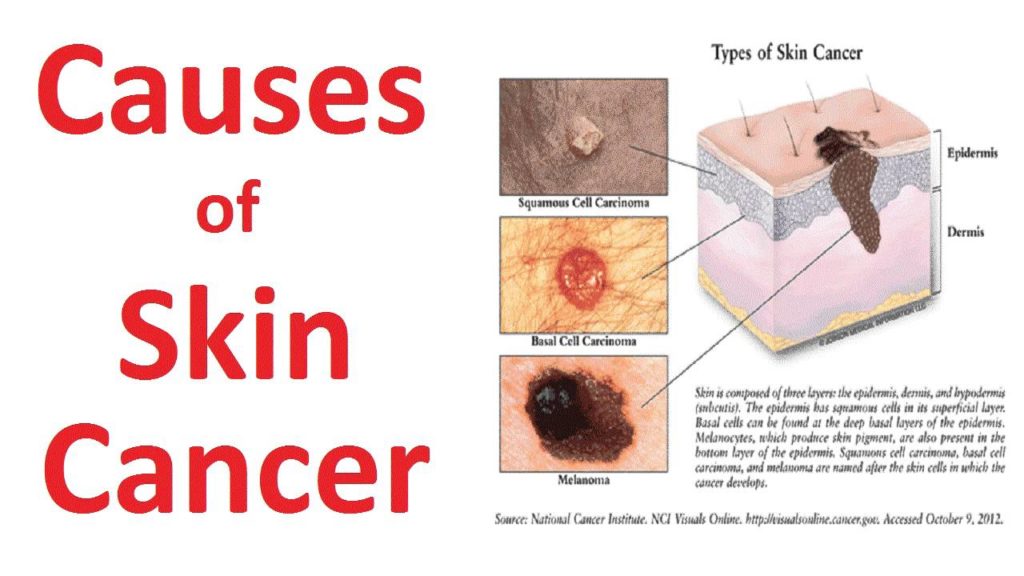
About skin cancer
Skin cancer is a disease of the body’s skin cells usually as a result of skin cell damage. Skin cancer can grow when the cells which make up our skin are damaged, causing them to grow abnormally.
Each time your skin is exposed to ultraviolet (UV) radiation, changes take place in the structure and function of our skin cells. Over time, the skin can become permanently damaged, which will worsen with each exposure.
Every additional decade of overexposure to UV further increases your risk of skin cancer. Increased use of sun protection against sun exposure will help prevent skin cancer and melanoma at any age.
All skin types can be damaged by exposure to UV radiation. People with skin types which are less likely to burn are still at risk, albeit lower, of developing skin cancer
Skin cancer types
There are three main types of skin cancer . The most serious is melanoma. Like all body tissues our skin is made up of cells: basal cells, squamous cells and melanocytes.
Skin cancer types are named after the skin cell in which the cancer develops: basal cell carcinoma, squamous cell carcinoma and melanoma. Carcinoma is another word for cancer. Basal cell and squamous cell carcinomas are often grouped together and called ‘common’ skin cancers.
People at higher risk of skin cancer
People at higher risk of skin cancer are those who:
- previously had a skin cancer and/or have a family history of skin cancer
- have a large number of moles on their skin
- have a skin type that is sensitive to ultraviolet (UV) radiation and burns easily
- have a history of severe/blistering sunburns
- spend lots of time outdoors, unprotected, during their lifetime
- actively tan or use solariums or sunlamps
- work outdoors.
Family history
Sun exposure is the cause of most skin cancer. Less than 5% of all melanomas can be explained by an inherited gene.
Risk factors for family skin cancer include:
- a personal history of melanoma at an early age; the average age to be diagnosed with melanoma is 33 years
- a personal history of more than one melanoma
- many moles on your skin; more than 10 on the arms and 200 on the body
- many unusual moles
- a blood relative diagnosed with melanoma at an early age
- a blood relative diagnosed with more than one melanoma
- a blood relative diagnosed with melanoma of the eye.
A large number of moles
The more moles you have on your skin, the higher the risk of the most dangerous type of skin cancer – melanoma.
Moles are overgrowths of melanocytes (a type of skin cell). We are not normally born with moles, but most of us will develop some on our skin by 15 years of age.
The number of moles we develop is determined by genetic (inherited) factors and exposure to ultraviolet (UV) radiation.
Australians tend to have more moles than people living in other countries, possibly because of childhood sun exposure.
What do moles look like?
Moles can range in colour. They are generally medium to dark brown but can also be skin-coloured or black.
The majority of moles are flat, relatively even in colour and regular in shape. Some moles are raised and these are usually soft to touch and lighter in colour.
Dysplastic moles
These moles look different to ordinary moles and may evolve to melanomas. If you have multiple dysplastic moles you are at greater risk of melanoma. Your doctor may recommend regular checks with a dermatologist (skin specialist).
See your doctor if you think you have moles with the following ‘dysplastic’ features:
- larger than most moles
- smudgy and irregular edges
- uneven in colour
- may have some pinkness.
Skin types and skin colour
Skin types which are more sensitive to ultraviolet (UV) radiation burn more quickly and are at a greater risk of skin cancer
How skin cancer is diagnosed
Skin cancer is diagnosed by physical examination and biopsy.
Biopsy is a quick and simple procedure where part or all of the spot is removed and sent to a laboratory. It may be done by your family doctor or you can be referred to a dermatologist or surgeon. Results may take about a week to be ready.
How skin cancer is treated
In choosing the best treatment option, your doctor will consider your age and general health, the type and size of cancer, where it is on your body and what you want. The treatment choice will also depend on whether the skin cancer has spread elsewhere in your body.
Types of treatment include:
- surgery
- freezing
- scraping
- radiotherapy
- chemotherapy
Surgery for skin cancer
Surgery for non-melanoma skin cancer
Surgery is the primary treatment for most skin cancers. A surgeon will typically perform skin cancer surgery to remove a localized skin cancer. For skin cancers that have not spread, surgery may be curative, and no other treatment may be needed.
In general, the skin cancer cells are removed along with a small amount of surrounding normal skin (known as the margin). This minor surgery is often performed using only a local anesthetic. If nearby lymph nodes are enlarged and your doctor is concerned that the skin cancer cells may have spread, he or she may want to perform a lymph node biopsy to look for cancer cells.
Other non-melanoma skin cancer surgeries & therapies
In some cases, nonsurgical forms of therapy may be used to remove or destroy a localized skin cancer. These techniques are most often used for treating small, early stage basal cell or squamous cell carcinomas. Non-surgical procedures include:
- Cryotherapy:Also known as cryosurgery, this technique uses liquid nitrogen to freeze and destroy the cancer cells. This is usually only used for small skin cancers.
- Photodynamic therapy:In this technique, a special chemical is applied directly to the tumor, or injected into the bloodstream. This chemical makes the cancer cells sensitive to certain types of light, which is then focused on the tumor, causing the cancer cells to die.
- Topical chemotherapy:Chemotherapy is the use of drugs that kill cancer cells. In this form of therapy, a cancer-killing drug is placed directly on the skin cancer. However, because the drug can only kill the cells it contacts, and cannot penetrate deeper into the skin, it is generally used only for very superficial skin cancers.
- Immune response modifiers:Certain drugs, such as imiquimod or BCG vaccine, can boost the body’s natural immune response against non-melanoma skin cancers, and may be applied to, or injected directly into, the cancer.
- Laser surgery:This is a newer technique that uses a laser beam to destroy cancer cells, and may be used to treat very superficial skin cancers.
Rotational skin flaps and skin grafts are commonly used for reconstruction following surgical removal of large skin cancers, or skin cancers of the face and head.
